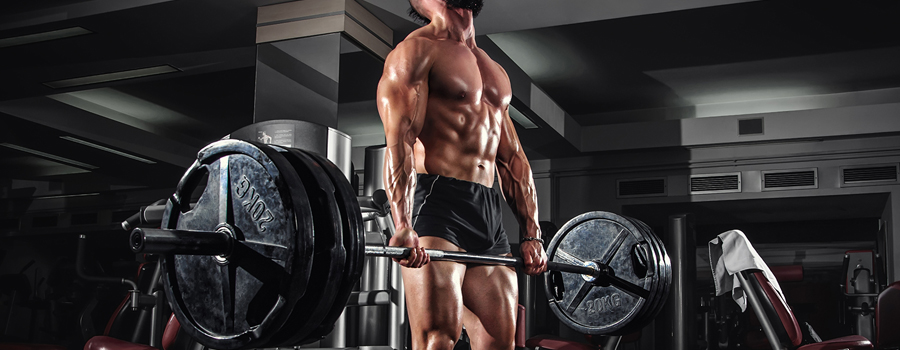
To many lifters, the deadlift is commonly referred to as the king of all exercises. Many believe there is no better true test of strength or other exercise that will pack more muscle and size than deadlifts.
If you have spent any time amongst power lifters you may have heard the term "The contest doesn't start till the bar hits the floor". This statement renders the deadlift as the king of lifts in competitions and often fabricates the end results in Power lifting competitions.
Whether you’re training as a bodybuilder, for off season sports performance or just for aesthetics, if deadlifts aren’t a BIG part of your program, things need to change immediately.
Conventional, Snatch Semi Sumo or Sumo stance?


Your deadlifting technique will require a bit of trial and error to find the deadlift style that works best for you conventional, snatch, semi sumo or sumo are the most common stance used. Limb length, torso length, mobility, back strength & hip strength will determine which is best for you. However don't be afraid to try different styles as your abilities advance and mix it up for greater results.
If you’re new to deadlifting start by gaining experience and confidence with the Sumo styles as this will help lengthen muscles and places less strain on the common weak areas such as lower back, core and your grip.
As you advance, move into the conventional stance. One of the biggest downfalls commonly seen in a faulty technique is directly linked to the lack of mobility in the glutes, hamstrings, pelvis and upper spine. We recommend stretching and the use of foam rollers to quickly and effectively improve ones technique.
A great way for starting a deadlifting session once you’re confident is starting with light in Sumo stance to functionally stretch out the adductors, hamstrings and glutes, moving into Semi Sumo and eventually into conventional, if you feel any restrictions in the sumo then hit the matt and stretch it out.
Bar grip - mix grip vs. overhand grip


You’re only as strong as your weakest link, for many confident lifters grip strength will be the first to go, training overhand grip or snatch grip is by far the best way to improve your functional grip strength and as a rule of thumb you should be able to lift 80% of your 1 rep max with this grip.
Mix grip should allow lifters to gain that extra 20%, some may find discomfort in the shoulders and this will come down to a few technique adjustments with shoulder placement when setting up pre lift.
Another alternative training grip is the snatch grip, this grip is used to improve range of movement, whilst also apply more emphasis on the upper back, gluts and hamstrings. This style is best used during volume training as less weight is required, snatch grip will improve your overall lifting conditioning and grip strength, so work it into your programming.
Programming for bigger lifting
Programming for deadlifts needs to be carefully thought out to avoiding "burning out" or putting too much stress on the CNS (Central Nervous System), for example training weekly and pulling your max deadlift weight each time, typically will not produce great results and be of little, if any benefit in weight progression.
Two very well known and well respected deadlift programs are the Coan/Phillipi program and the Magnusson/Ortmayer program.
Bulk Powders’ athlete, powerlifter and strongman David Parmiter holds a world record deadlift of 327.5kg in the 90kg weight class and gives incite on his pre competition program;
I’ve personally run the Coan/Phillipi program numerous times with solid success. Leading up to a comp I will also often use heavy singles (not 1 rep maxes) in my training with good success. Looking back over my training log in the lead up to CAPO Powerlifting Nationals 2013 where I pulled a GPA 90kg weight class world record deadlift of 327.5kg, my deadlift workouts looked like this:
12-6 weeks out, I worked on a lot of volume lifting (3-6 reps) in the 60 - 80% of my 1 rep max range and incorporated the snatch grip to increase my range of motion and to build a solid pre comp foundation.
Moving on to pre comp training
5 weeks out: 250kg x 1, 280kg x 1, 310kg x 1
4 weeks out: 250kg x 1, 280kg x 1, 320kg x 1
3 weeks out: 240kg x 2, 250kg x 1, 1, 1
2 weeks out: 260kg x 1, 295kg x 1, 330kg x 1
1 week out: 180kg x 1, 200kg x 1, 1
I trained a lot of heavy singles leading up to the comp. However keep in mind I had spent most of the year doing higher reps/volume of deadlifts to build on my core base to set up a solid "launching pad" for my heavy single lifts.
Recovery
Deadlifts are extremely strenuous on the mind, body & central nervous system (CNS) requiring longer post workout recovery times. Most Power lifters will only perform them once a week, some even once a fortnight in their training programs.
Leave the bar on a heavy note; just because you’re not sweating as much as you may on other training days, end your deadlift training on your heavy weight. Don’t be mistaken, heavy lifting will impact your CNS. The bodies CNS requires more time to recover than other training days where you may feel more physically exhausted and sweat more. There is a big difference between musculoskeletal recovery vs. CNS recovery, so train smart, recover smart and you’ll grow.
Alongside smart recovery times, quality sleep and nutrition, Bulk Powders recommends sports supplements such as Whey Protein Powder, Branch chain amino acids, L Glutamine and Fish oils for advancing recovery times after heavy lifting.
Lift smart, train smart, recover smart and grow!